…breathe life into Oklahoma. If any readers out there are affected by the tornado, my thoughts and prayers are with you.
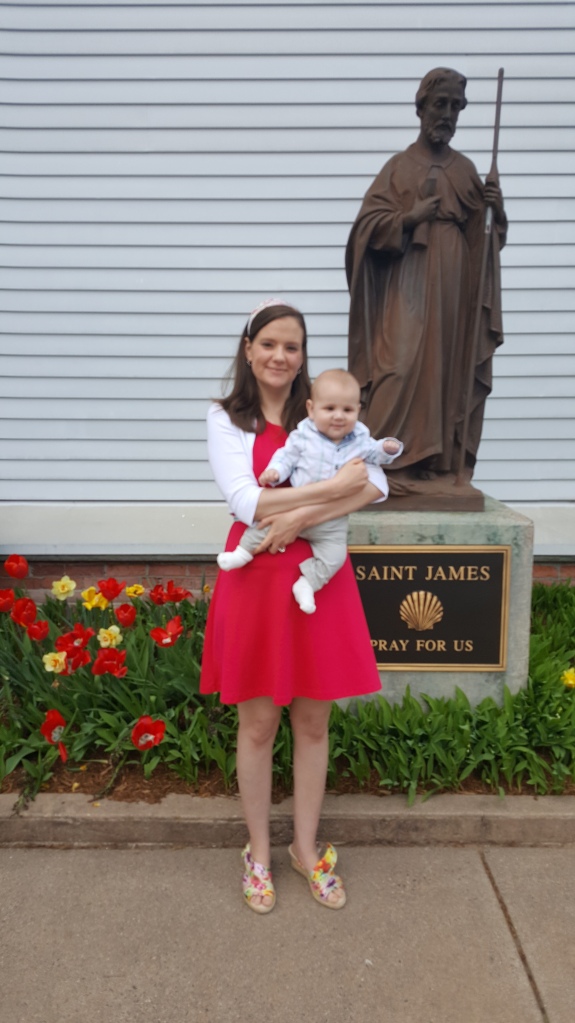
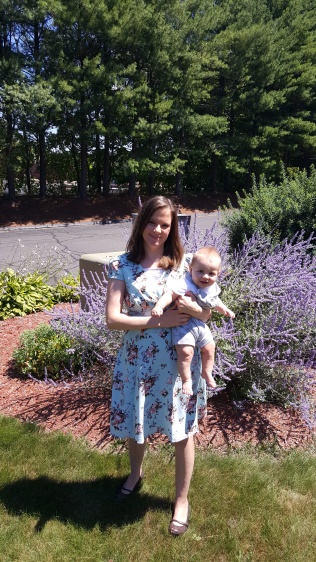
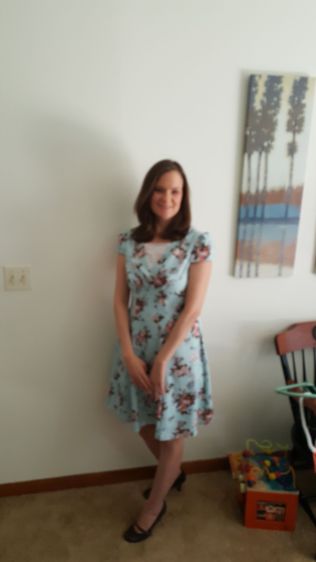
Dressed liturgically yesterday:
Dress: A number from Burlington Coat Factory circa 2007.
Sweater: Ann Taylor Loft, ages ago.
-1-
Saturday: Delicious drinks followed by crucial conversation that prompted some serious sobbing.
-2-
Sunday: Mass followed by missing followed by much needed laughter.
-3-
Monday: Overtired from the fun but frustrating weekend.
-4-
Tuesday: Copy edits on the book. realize I need to take the advice of my character. She’s 14.
-5-
Wednesday: Super fun night at YA Author Panel and catching up with dear friend. Got to evangelize! (Q: So, is that why my friend’s 7-year-old is in a wedding dress on Facebook? A: Whoo boy. At least they didn’t order a limo, right? My DRE friend saw that happen once. First Communion: We’re doing it wrong.)
-6-
Thursday: Another super fun night, this time at a Children’s Book Diversity panel (it is Children’s Book Week). At peace with situation with Special Guest. Read book that is thought-provoking, but feel like if author understood Catholic theology, he’d be less harsh on the girl whose actions indicate she has some formation in the whole body-and-soul-are-integrated thing. (Note: book is for mature teens who can think compassionately and charitably toward those formation has led them to lives that are not representative of ToB.)
-7-
Friday: Went to doctor to discuss some test results. Am told “Turns out we were chasing something that was never really there!” Dude, tell me about it. Life story right there.
Happy last week of Easter! This Sunday was a bittersweet one. More on that after the clothes.
On me:
- Purple twirly dress from The Limited (last Fall clearance).
- Navy cardigan from a former roommate’s closet, I think.
- Silver gladiator wedges by Naot. Sooo comfortable on the soles. Hilariously, I ended up tripping in them more than walking (poor footfalls) than Friday night when running for the train in straight heels.
On Special Guest:
- Green polo from wherever men buy such things. So, could be anywhere!
My roomies were very kind to let my best friend crash on our living room couch for a visit this past weekend. He is a gallant gentleman. Who lives so very far away. Prudence and patience are the virtues God wants me to work on…
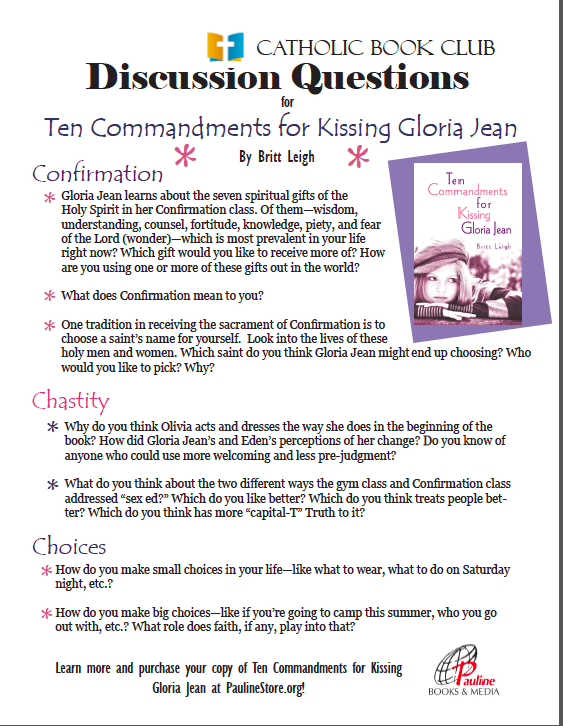
Announcement! After an amazing writing conference last weekend and growth in the feeling-more-brave department, I have decided to link two of my identities! Blogger-me is the same person as Writer-me, who is the same person as Worker-Me (but she is remaining anonymous in the grand tradition of others in her field). So…the Proverbial Girlfriend is none other than Britt Leigh, a soon-to-be debut author!
-1-
This is my website: brittleighbooks.com. I blog about books and writing and reading. Authentic love is one of the major themes I explore with my fiction. Be sure to check out the blogroll link to kidsfaithgarden.com
-2-
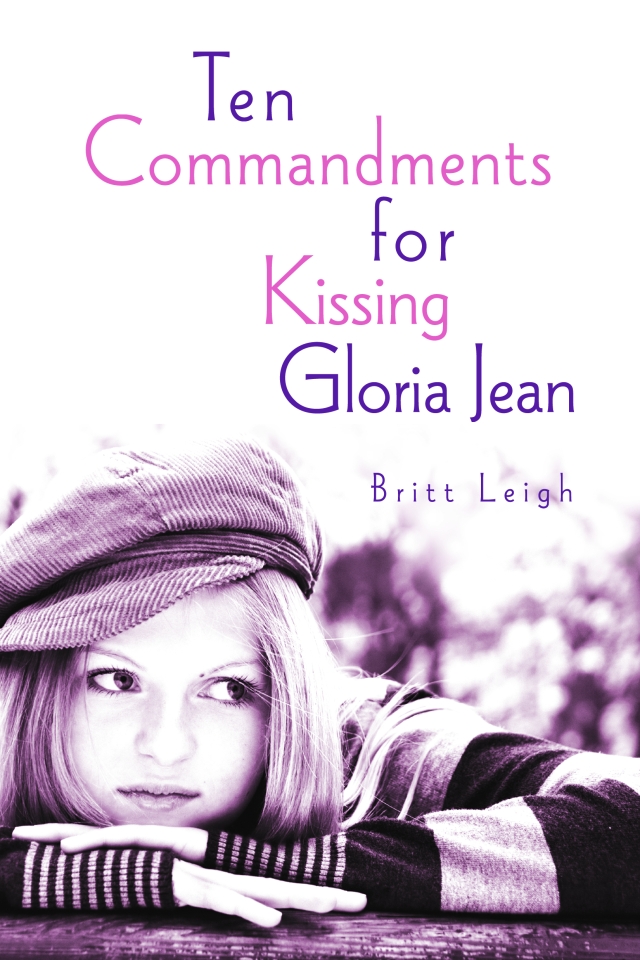
This is my book:

Click me for the Amazon listing! It doesn’t release until January, but I will let you know when pre-orders are possible.
A teaser: Love is patient. Gloria Jean is not. Love is kind. Celiac is not. Love never fails. Faith might.”
-3-
Worker-me got to spend several hours reading about Love and Responsibility. You know how some people are cheerleaders for ToB? That is me and L&R. I am so in love with this philosophy, I want to name future children Karol and John Paul.
-4-
So now Writer-me wants to make the themes in L&R accessible to middle-schoolers. A chastity educator friend of mine has bemoaned that after several presentations, she thinks we’re too late. But I refuse to leave them out in the darkness where there is wailing and gnashing of teeth! So if you all have any ideas on what type/format of book 13-16 year-olds would pick up about the subject, please let me know!
-5-
I am firmly convinced that such national news stories as the women in Cleveland (and by extension all abductions) and the Air Force’s S*xual Assault Prevention and Response Office CHIEF being accused of s*xual battery (I mean, COME ON!) would never happen if people were formed in the principles of L&R (namely, the dignity of the human person, justice to the creator, chastity…)
-6-
My most favorite blogger, a former Serpahic Single, wrote about chastity talks, and after reading what she and the commenters have to say…I agree. I do not <3 chastity talks if they are indeed performed as described. There’s gotta be a better way.
-7-
That being said…chastity talks and study of L&R…are winning out. Moms, this is really important. As uncomfortable as your kids might get, continue to form them in these ideals. For one day they will be 28ish and ever so thankful (no matter how painful/frustrating/exasperating it feels) that the charity definition of love is clouding their judgement, and not the eros. Tell them to find people who know to guard their hearts at exactly the times they themselves don’t want to. Hopefully they’ll see that the most responsible actions and words are the most loving.
Happy Bright Week to all the Eastern rite readers! This weekend I was at a writers’ conference in Springfield, MA. It was wonderful. I also got to experience a different Mass for the first time in a while. So my outfit was comfortable and functional, but still church appropriate.
Black cami: Forget. I had to throw it out anyway. The lace around the bustline was starting to separate scandalously. There was some yanking and pulling of a sweater…
Black pants: New York and Company. Affordable, serviceable, and still classy.
And book earrings from Broadside Books in Northhampton. Designed by Cory Anne Sharer. http://www.coryannesharer.com/gallery.html
Seven sweet things about these first few weeks in May:
-1-
NESCBWI Writing Conference. Every year, the New England Chapter of the Society of Children’s Book Writers and Illustrators hosts a regional conference. I am super excited to take a day off work, travel to Springfield, MA (there are awesome Seuss sculptures!),
take lots of workshops on writing, editing, publishing, and marketing; meet up with friends old and new; drink wine and eat too much junk food in the hotel room, and wear this shirt made of WIN:
-2-
The Kentucky Derby, which of course means fantastic hats.
-3-
Cinco de Mayo. Oh gracious, between the mint juleps on Saturday (Derby on the 4th) and the margaritas on Sunday (the 5th), it will be a wonder that anything of actual substance gets done this weekend.
-4-
A very dear, long-time friend is coming to visit on May 8th. Super excited. The Mother’s Day What I Wore Sunday link-up may feature a very special guest!
-5-
Mother’s Day.
I am going to start a novena on May the 4th for women who long to be mothers, but are not yet (singleness, infertility, miscarriage). Join me in appealing to our Blessed Mama for the consolation of the wannabe mamas.
-6-
May the Fourth is known as Star Wars Day.
-7-
Pentecost. I am excited to try out a few new things that I feel called to do to live out a life of mission. Stay tuned!
Would You Date You? By Anthony Buono (Servant Books, July 2012). With very many thanks to Sarah Reinhard, who sent this copy gratis as a prize in a raffle on her blog, snoringscholar.com. GREAT site for ProverbialMoms.
Having read my fair share of the “single Catholic lady” genre, I initially was excited to engage with WYDY. The cover is bold; the title provocative. Throughout the ten chapters, he is mostly careful to not skew to a male or female bias; or play the blame game. However, I do not feel it is one of those books that can be adequately reviewed in a paragraph or two. Sometimes books are capable of receiving a summary judgment. However, it does many more justice to look at each part of the whole, and that is what I have done for this book. The best summation I can come up with is that Mr. Buono says many wonderful, important things, but also some other things that should be taken with a grain of salt.
At the Start
Before reading this book, some readers may have to set aside pre-existing notions of who this book is for and what it is doing. For example, with asking one’s self the title, one might privately answer “Of course! Wouldn’t to say otherwise presume some kind of self-esteem issue?” But the charming Foreword by Lino Rulli and the Preface by Mr. Buono suggest that this book isn’t necessarily for Nice Catholic singletons who go on perfectly pleasant dates with other Nice Catholic singletons and are still stymied as to why a relationship won’t progress beyond one date, three months, or even three years. Rather, this line: “What we need is to set aside enough time to improve ourselves so that there is no time to criticize the person you’re dating or married to,” (xv) suggests that this book is for those who know or at the very least suspect that there’s something flawed in their own behavior, especially when relating to members of the opposite sex. There are two dangerous implications with that quoted statement: 1) we develop such an egotistical scrupulosity that we don’t see the very real times our significant others need charitable correction or running away from (emotional manipulation, stealing, abuse, etc.). 2) Perhaps by improving ourselves to be worthy of the love we think we deserve (the greatest), the people we’re dating or are married to are also transformed into similarly quality people.
Additionally, though readers may want to bring to the text their own experiences, some of Mr. Buono’s pronouncements are stated without much context, conditions, or exceptions that would address situations that often arise in real-life dating situations. So it falls to the readers to rely on their own prudence when certain beliefs or encouragements cannot be safely practiced or effectively executed in their own relationships. He does state at the very end of Chapter 10 a few words on how abusive relationships are different, but this is information he should’ve provided up front.
You will at first get the sense that Mr. Buono’s point of the book is that when analyzing the failure of relationships, we shouldn’t focus on questioning our date’s/spouse’s motivations (Preface). His primary goal is for us is to perform a sort of relationship Examen. Where the Preface fails is in not anticipating the readers’ “but, but!” statements and addressing them. Sometimes relationship failure really is a result of a problem with the other person and not our own behavior. To answer the questions Mr. Buono implies we foolishly ask of the other: Sometimes “he doesn’t call” because he’s a cad or realized he doesn’t want a serious relationship, or at least not with you, despite how lovely you are. Sometimes “women won’t tell you why we’re upset” because sometimes we just want you to display some emotional intelligence and figure it out with the amazing brain God gave you, or telling you would break the emotional chastity rules we’ve set up for ourselves. Sometimes “men are picky” because they can afford to be, because for every one guy at a Theology on Tap, there is a table full of women to choose from. And sometimes when “women play games,” it’s because we live in a broken world and have been taught this is the way to manage relationships.
If readers have told their inner voices to pipe down, they will get to read about ten virtues that Mr. Buono says we need to develop within ourselves, and consequently improve our relationships with others: heavenly, humble, prayerful, pure, charitable, merciful, detached, self-aware, flexible, and practical. Where I take most issue is the whole conceit using the imperative verb “become.” In the Preface, Mr. Buono writes “We must all seek to transform ourselves into persons capable of loving and being loved,” (xvii). Here’s the thing, if you are a person, you already are capable of loving and being loved. God made you that way from the beginning (Catechism of the Catholic Church 27). Rather than transforming ourselves, we are called to continue being ourselves. Again, Mr. Buono doesn’t address readers’ valid protestations: “But I do practice humility.” “It was my date who acted impurely, not me!” “I have been single so long and spend so much time in adoration, I don’t think I could be any more self-aware.” After engaging with each chapter, I would advocate for a different reading: instead of thinking you don’t already have these virtues, actually use the text as a tool for self-reflection: “How was I heavenly today? Was there anything about that date that showed I wasn’t as flexible as I could be?”
Chapter 1: Become Heavenly – We begin with some heady theology about considering heaven first. Okay, marriage is a vocation, and a vocation is that by which we seek to attain heaven. Where Mr. Buono may lose people is his section on what it means to be a person. He writes: “Becoming a whole person is a process,” (3) which leads to such questionable sentences as: “Yet a seven-year-old is not fully a person” (3) and “To be a bad person is to be less of a person.” (4) He draws these conclusions from his definition of full personhood as “being in perfect harmony with God’s plan for us.” So one could conclude that no one is really a full person because none of us are in perfect harmony with God’s plan – a lot of us don’t even know what it is! Further, the ethicist Germain Griesz has this has this to say about personhood in The Way of the Lord Jesus: Living a Christian Life, Vol. 2: “Personhood is not an attribute attained by development,” (bold in original; 489). In the larger scheme of this book, some of these sentences are mere trees in the forest. However, with the legal acceptance of destruction of human life (abortion to Physician-Assisted Suicide), it is imperative that definitions of personhood give anyone cause to think it is devalued.
Next in this chapter, Mr. Buono spends two pages discussing how the other shapes people’s personhood as they grow up. Of course other peoples’ influence is an important factor to consider in your adult relationship! I don’t know why he’s undermining his own argument that we need to focus on the self. However, I wouldn’t mind if he spent a couple sentences addressing the very common reality of how mental illness, stress, abuse, etc. from the self and from the other impact relationships.
Later on, another problematic line: “Working on yourself is continuous if you seek to be of value to someone else,” (4). You are a human being, ergo you always have inherent value to other human beings. What Mr. Buono neglects to realize is that poor self-esteem is a large inhibitor of healthy relationships and a condition for many singletons. Reading a line like that is far from affirmational. The only helpful thing about this chapter was the notion that to become “heavenly,” we should first seek to imitate the person of Jesus Christ and to see Him in every other person we meet and to love them with His love. It would have been a much more effective chapter if the material was presented as practical or more of the “reality check” promised in the Preface.
Chapter 2: Become Humble – Mr. Buono defines humility as truth. If you go with that, then the first part of the chapter makes sense. Essentially Mr. Buono advocates for us to look for people who are authentic (that’s the word he really means to use). However, the Catholic Encyclopedia defines humility first and foremost as a “quality by which a person considering his own defects has a lowly opinion of himself and willingly submits himself to God and to others for God’s sake.” Humility is a GREAT virtue to have when dating, but is contextualized in this chapter as a form of co-dependence. Where I thought this chapter faltered was the lack of practical ways to recognizing issues the author brings up like “Do I live authentically? How do I think I am humble (according to the primary definition we all know)? Am I being a Pharisee?” He also should have provided more context for statements like “At this point it is critical to begin asking yourself some honest questions: ‘Did I do something to contribute to this?,’” (21). When your beloved is sullen because you unnecessarily yelled at him? Yes, you probably did. When your beloved hits/verbally abuses/starts using pornography? A resounding NO, you did not. If humility is truth, then it can be true to not assume such fault.
Chapter 3: Become Prayerful – A WONDERFUL chapter. It focuses on the reader of the book who wants his or her “reality check.” It offers practical advice and steps with just the right amount of correct theology! Particularly humbling were the paragraphs on the natural emotion of frustration. Lord knows we singletons have been there at some point – the Facebook announcements of other people’s engagements or the summer of seven baby showers for women who not two years ago were fellow singletons with you. It was particularly encouraging to read “God will not be outdone in generosity.”
Chapter 4: Become Pure – I LOVE the introduction to this chapter. Mr. Buono really evokes the primary essence of purity – not a list of dos and don’ts of sexual chastity, but the wonderment at the notion that living purely allows us to see God. However, I was disappointed by the focus on women’s dress in the discussion of modesty. Do physically fit men really not know what they do to us women when they go running or play volleyball on the beach shirtless? I shall give you a hint: it’s the same effect as low-cut tops or high skirts. Also, if men are visual creatures and clothing is the biggest problem, then as emotional creatures, women’s biggest problem is men’s emotional immodesty. Oh how I wish this was addressed so men could get their “reality check.” Another answer to that question we shouldn’t focus on – “why is she so upset?”: it’s because you confided in us and we thought that was a sign you liked us liked us. But you then went and courted our bible study partner. I do really appreciate the section on kissing: frank, informative, and non-judgmental. BEST theological pronouncement so far: “At the heart of virginity is the right to express our sexuality,” (49).
Chapter 5: Become Charitable – Now see, this introduction is how to be affirmational! Another great chapter on the whole. To be charitable is to be a peacemaker. And I love that he referenced the Holy Family (who also could be looked upon as models to be pure). What is so great is that sometimes there can be a misappropriation of charity or a wrong interpretation of what it means (staying with an abusive partner out of charity; offering “death with ‘dignity’” as charity to the suffering), and Mr. Buono points out the correct definitions and emphasizes how true charity involves order and health in the relationship.
Chapter 6: Become Merciful – Much of this chapter is sensible: being merciful means helping the other feel safe to express themselves as they are, be who they are, without fear of reprisal or lashing out. However, mercy and forgiveness are qualities that need distinction and context when put in terms of dating life. For when you read “We are quick to dismiss someone for their flaws, their past, or other ways we determine them to be damaged because we see these things as a potential threat to having a hurt-free marriage,” (65), you get the sense we shouldn’t do these things, even though it might be prudent to do so. Perhaps it is the quickness with which we do this that bothers Mr. Buono, but he does not indicate that. No, there is more unpacking his concept of creating a “home” to make your beloved feel safe when they inevitably mess up. But what if the “messing up” really does cause harm to a relationship/marriage and makes you feel less safe? More distinctions need to be made, because what if the date’s flaw is porn, a drug addiction, or those rage issues that occasionally flare up? Also at issue is the sense one gets that Mr. Buono would prefer we always be forgiving and not cut a person out of our lives. He acknowledges that this is a step people can and do take, and is merciful enough not to judge us too much if we have cut people out. But I think enough people have been the victims of psychological or physical harm who are on the whole healthier persons with the offenders out of their lives. Perhaps Mr. Buono could have extended this chapter to explore how mercy is different according to situations. In the case of de-friending someone, mercy is prayers for the person (from far away) and never slandering the individual to others. This would have been a stronger chapter, like #5, if Mr. Buono could have illuminated how mercy, charity, and trust are interdependent on one another. Yes, we should “make the one[s] [we] love feel safe,” (76) through mercy and forgiveness, but really to create spaces of physical, emotional, and spiritual safety is to FIRST do no harm.
Chapter 7: Become Detached - This chapter is not entirely about detachment from worldly things (money, things, fame, etc.), but about detachment from people. Here we have concrete “reality check” questions about the importance we bestow on our relationships with others and with God. A thought-provoking gem: When was the last time you cried and what was it about? Now, when was the last time you cried in confession? (cf 79). This chapter even includes “warning signs.” Reading about those make me wish certain other chapters had the same format. I also liked the clear connection to idolizing earthly things to problems in a real relationship situation. Finally, but most importantly, Mr. Buono forces us to begrudgingly confront our natural inclination to do our own will. Thankfully, he offers realistic ways of detaching from this mindset.
Chapter 8: Become Self-Aware – If you’ve ever looked at a pre-Cana program or pre-marital inventory, you will recall that it likely had some questions or statements about your upbringing, character, personality, past, and problems. This chapter is a basic pre-cursor to that self-reflection. Mr. Buono illustrates how much more self-awareness is than knowing who you are and what you want. It is more about how you are and why and how that affects relationships. What I object to is the use of the word “damaged.” On p. 93, he rightfully advocates for seeking therapy for addressing serious issues, but calls you “damaged.” I don’t think any therapist would call a client “damaged” to his or her face. I would also advise single readers that many times the past should stay in the past (ie no hang-ups on exes), in some instances in our sexualized world, if you think you want to marry someone, you do need to bring up the past and are both honest about any previous experiences so y’all can get tested and, in some cases, vaccinated (men are the carriers of HPV, ad currently have no signs nor any way to test themselves). Today’s reality is that virgin men and women may more than likely marry a non-virgin, and past will be important: instances of diseases, other children, or abortions will definitely affect marriage.
Chapter 9: Become Flexible - Second most awesome thing Mr. Buono says: the best way to really get to know someone’s authentic self? Road trip. I have long felt that when done at an appropriate stage in the relationship that such an excursion – like flying out of a snowy city on the day before Thanksgiving – really gives you a feel for how you both are at your base level. So this chapter is more about how on certain levels, people and relationships can and will change. Sometimes being flexible means adjusting to the reality that even if you hoped your beloved would change, he or she likely won’t. But where Mr. Buono and I differ is on the issue of what happens when the other doesn’t change. While he states that “If you cannot handle who that person is, that does not necessarily mean they are not the right person…consider you need to change for the better,” (emphasis mine, 104). But if you know you can’t accept a man who will never come around from atheism, or you know that you can’t handle that a woman is always a shrieking harpy, you should be allowed to remain unchanged and have limitations with how your faith and dignity will be treated in a marriage. Mr. Buono wins me back a little with his advice about compatibility. I like how he dissected the word to show that it truly means more than just getting along because you like the same genre of movies, music, and food. By this point we should just presume that when he says there are times we feel a person is “unbearable” (111), he means they want you to watch boring television shows or are gratingly hormonal, and we should patiently endure our spouse’s human moments. But if you, dear reader, see the word “unbearable” and think about that guy who hit you, no, you never have to patiently endure that. Also in this chapter, he advocates that we have a sense of humor. This section has yet another spurious statement: “It must make God chuckle whenever He comes across one of His children who is pitching a fit about a situation He has allowed for the good of that child, but who feels he or she does not deserve it,” (107). What about when we pitch fits about things that are allowed that do not have any discernible good and that no one deserves: abusive spouses, cancer from secondhand smoke, rape? I don’t think God is chuckling that one of His sons or daughters hurt another of his children in these ways.
Chapter 10: Become Practical - Mr. Buono saved the toughest school of thought for last. He argues that we should be practical in our approach to dating and marriage. Romantic love/desire/butterflies/swooning are all mere bonus points to have when marrying someone…and in some cases, potential results some time into the marriage…and in other cases, not truly necessary. His thesis is that being practical is both spouses feeling the same about committing to living out a sacramental marriage because each one finds the other a quality person. For those who read that book Marry Him! The Case for Settling for Mr. Good Enough, you’ll find a similar philosophy in this chapter. Yes, to love as Christians understand the word, is to choose to love, and Mr. Buono is correct in surmising that marriage is a lifelong period of continuously choosing to love your spouse and your spouse doing likewise. It is true that when dating we may not think of practicalities, and it is good of Mr. Buono to help us deepen our discernment process in this regard. However, it seems really dispiriting to think we should give up on having eros (passionate, romantic love) in our lives when practically speaking, all that’s required for marriage is agape/caritas (love that is willing the good of the other). The pope’s own homilist delivered a homily in which he says you cannot have eros without agape and you cannot have agape without eros.
Chapter 11: A Meditation on the Crucifix for Singles–In this final chapter, Mr. Buono provides an examination of conscience specifically for singles, based on the crucix–that image of the height of love. He urges us to reflect on the negative choices we might make with our thoughts, our hands, feet, flesh, hearts, arms, speech, eyes, and self. Many of the questions are quite excellent and thought provoking. I only object to his calling “yes” answers to such questions as “sins.” For example, “procrastinating going to places…that offer me a chance to meet a quality person”…is not objectively an immoral action, and “indifference to nudity” needs to qualified, for, one should be indifferent to certain forms…like in art. Oh, and I shouldn’t get started on how one should “remain silent and accept annoying things on a date”…And your thoughts: why is overindulging in the news sinful? What if it’s Catholic news?